
Inside RNIB with SRAG Employers
 April 16, 2026Posted by:
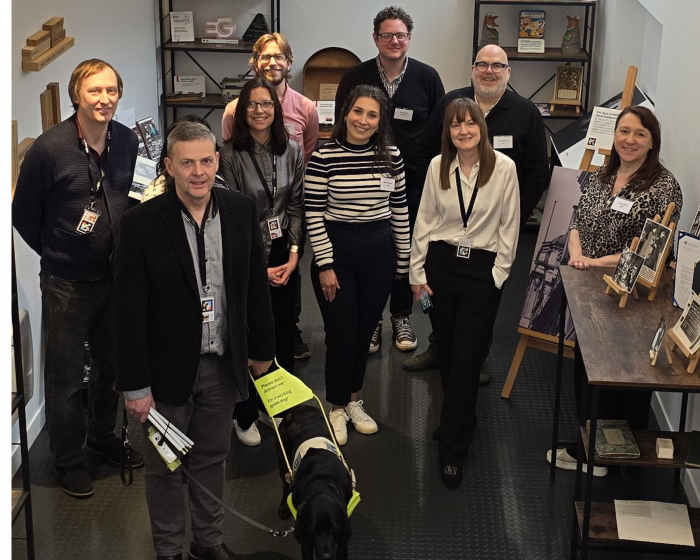
Members and Charter Mark holders of the Social Recruitment Advocacy Group (SRAG), including IKEA, Birmingham Metropolitan College and Amey (the latter also a Visibly Better Employer), joined other Visibly Better Employers, including Amazon, at the Royal National Institute of Blind People (RNIB)’s Grimaldi House headquarters in London for a day focused on one question: what does it really take to create a workplace that works for people with sight loss, and how does that improve working life for all?
Hosted and presented by RNIB team members, the session explored the practical realities behind inclusive employment, from recruitment, to workplace design, through to progression.
Understanding the scale - and the gap
Every day, around 250 people in the UK begin to lose their sight. Yet only one in four blind or partially sighted people are in employment. This means they are the most underrepresented group in working life.
The gap comes down to how work is set up, including the systems, environments and levels of confidence that shape day-to-day experience for both individuals and employers.
Through its services, RNIB empowers tens of thousands of these people each year, from emotional support and advice through to workplace adjustments and policy change.
The RNIB funds its work through a mix of donations, fundraising activities including its retail shops, grants and consultancy services, supported by thousands of volunteers (around 2,800 in the most recent reporting year).
A consistent message ran throughout the day: support works best when it is joined up early, not introduced when someone is already at risk of leaving work.
Lived experience: confidence, disclosure and support
Many members of the RNIB team are registered blind and working with sight loss. Their insights about confidence and disclosure, reasonable adjustments and advocacy, employer education and workplace design cut through to the heart of the issues.
For Debbie Miller, Director of Eye Care Advice and Support, the autoimmune condition she has lived with since birth has had a significant impact on her sight. She delayed asking a previous employer for support because she didn't want to disclose the progression of her sight loss. This wasn't down to fear of a lack of support, as she had a strong relationship with her line manager, but where she was in her own process of coming to terms with her sight loss.
Confidence needs to sit alongside the availability of tools and adjustments in a workplace culture where colleagues understand that the benefits of disclosure outweigh the risks.
Given the number of blind and partially sighted people in the UK, and the number of new sight loss journeys beginning every day, this is something every employer will encounter.
People are managing sight loss without saying so. The environment contributes to whether they stay silent or step forward, but it is not the whole story. Even with strong policies and processes in place, empathy remains essential.
What good looks like in practice
RNIB teams worked through the common barriers people face at work, grouped into four areas:
- the physical environment
- equipment and systems
- access to information
- organisational culture
From there, the focus turned to what can be done.
In many cases, adjustments are straightforward if the right questions are asked:
- changes to lighting or desk positioning
- using built-in accessibility features on existing devices
- adapting recruitment processes
- offering flexible or hybrid working
Alongside this, employers were introduced to assistive technologies by Andrew Dennison, Employment Technology Advisor, from screen readers and magnification tools to apps such as Seeing AI, which can read text and interpret environments in real time.
The theme was the need for more awareness of the tools that are already available. They include a free app, NaviLens, which is a smartphone app that uses high-contrast codes to let users scan surroundings and receive instant audio information about locations, products or navigation points.
Designing workplaces that include everyone
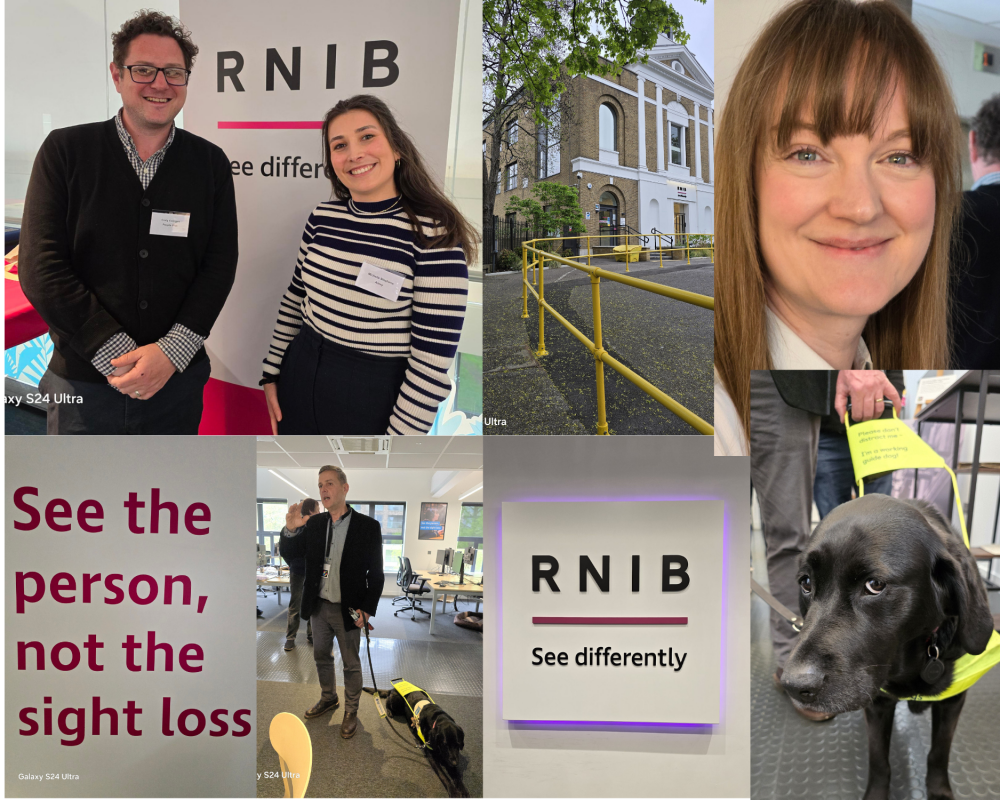
Led by Roy Imeson, Employment Advisor, and supported by Teal, his guide dog, a session on building design and accessibility highlighted how inclusion can be built in, rather than added later.
Using RNIB’s own award-winning Grimaldi House as an example, the tour explored how workplaces can be shaped around real user needs, from lighting and layout through to navigation and signage.
A case study in staying in work
A detailed case study brought this into focus.
Eileen, a midwife, experienced sudden and significant sight loss. Her role was highly visual, and the impact on her confidence and ability to work was immediate.
Through RNIB support, adjustments were put in place quickly, including specialist lighting, screen adaptations and practical changes to her working environment. Just as importantly, RNIB worked directly with her employer to build understanding and confidence.
The result was not just a return to work, but a sustainable one.
A growing employer movement
For PeoplePlus and the Social Recruitment Advocacy Group (SRAG), the value sits in bringing employers and expert partners like RNIB together, creating the conditions for collaboration that leads to consistent, practical change.
Employers are increasingly looking at how inclusive recruitment and retention fit into their broader approach to social value. Not as a standalone initiative, but as part of how their workforce operates day to day.
Clive Brown, Partnership Development Manager at RNIB, shared that he was proud to have been part of the very first SRAG meeting. To now welcome members of SRAG to Grimaldi House, with its size and the level of commitment shown by employers, was, "uplifting".
What happens next
The session closed with reflections on what to take back into their organisations. The RNIB Visibly Better Employer (VBE) standard, explained by Marie Clarkson, Employment Manager, provides a clear framework for action. Now embedded within Social Recruitment Advocacy Group (SRAG) Charter Mark progression, the standard supports employers to take a more structured approach to attracting, retaining and developing blind and partially sighted colleagues. The focus was on practical next steps: reviewing recruitment processes for accessibility, building internal confidence to have conversations about sight loss, making better use of existing tools and adjustments and connecting earlier with specialist support such as RNIB.
Creating workplaces that work for people with sight loss is not a single intervention. It is a series of decisions, made earlier and with more awareness. "See the person, not the sight loss" - we couldn't agree more!
To find out more about the Social Recruitment Advocacy Group, its Charter and how we work with RNIB, email us at [email protected].
Read More about SRAG Membership
April 16, 2026Posted by: